
There are moments when the world changes without its geography being physically altered. Streets remain where they have always been, buildings continue to occupy the same spaces, and cities seemingly retain their familiar form. Yet something shifts in the way they are crossed, observed and recognised. What until recently belonged to everyday life suddenly becomes distant, almost unfamiliar.
The past few months have created precisely this condition. They have not simply interrupted established habits, but have profoundly altered the perception of time, space and human relationships. Lockdown has redrawn the boundaries of everyday life, confining millions of people to familiar places that, day after day, have taken on different meanings. The home has become both shelter and boundary, a place of work and waiting, a private space and a window onto the world.
Everything that once seemed natural has acquired a different significance. Walking without a particular destination, entering a crowded room, observing someone’s face at close range, shaking hands, meeting by chance, sharing a space. Distance has changed even the meaning of presence. What once required no measurement has begun to be measured: the space between one body and another, the time spent apart from others, the very possibility of being together.
Absence has made visible what habit had rendered almost imperceptible.
Within this suspended condition, the digital dimension has progressively occupied the spaces left empty by physical reality. Screens, images and connections have become meeting places and instruments through which it has been possible to continue working, communicating, observing and discovering. The virtual world, previously regarded primarily as an extension of everyday life, has become one of the principal territories of human exchange.
Art, too, has inevitably found itself confronting this new distance.
What happens to an artwork when the viewer can no longer stand physically before it? What remains of the exhibition experience when the presence of the body is removed? Can a space without material substance still generate an authentic experience? And what kind of relationship can emerge between artwork and viewer when the place of encounter is a screen?
It is within these questions that the exhibition takes shape.
Not as a simple digital translation of a traditional exhibition space, nor as an attempt to artificially replace the physical experience of art. Instead, distance is embraced as an integral part of the project and transformed into a subject for reflection. Limitation becomes the starting point for imagining another kind of place: a space suspended between architecture and image, presence and absence, reality and representation.
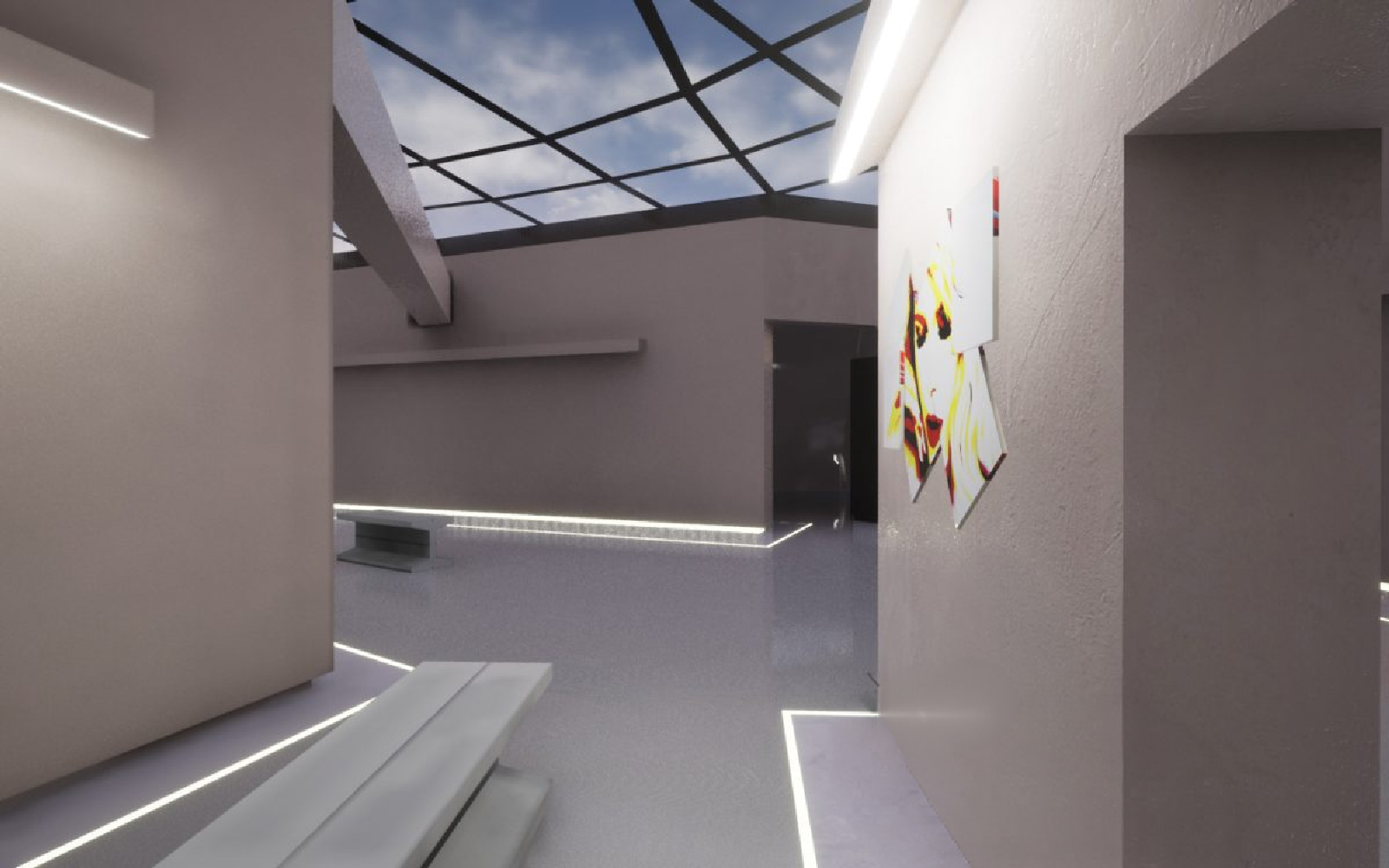
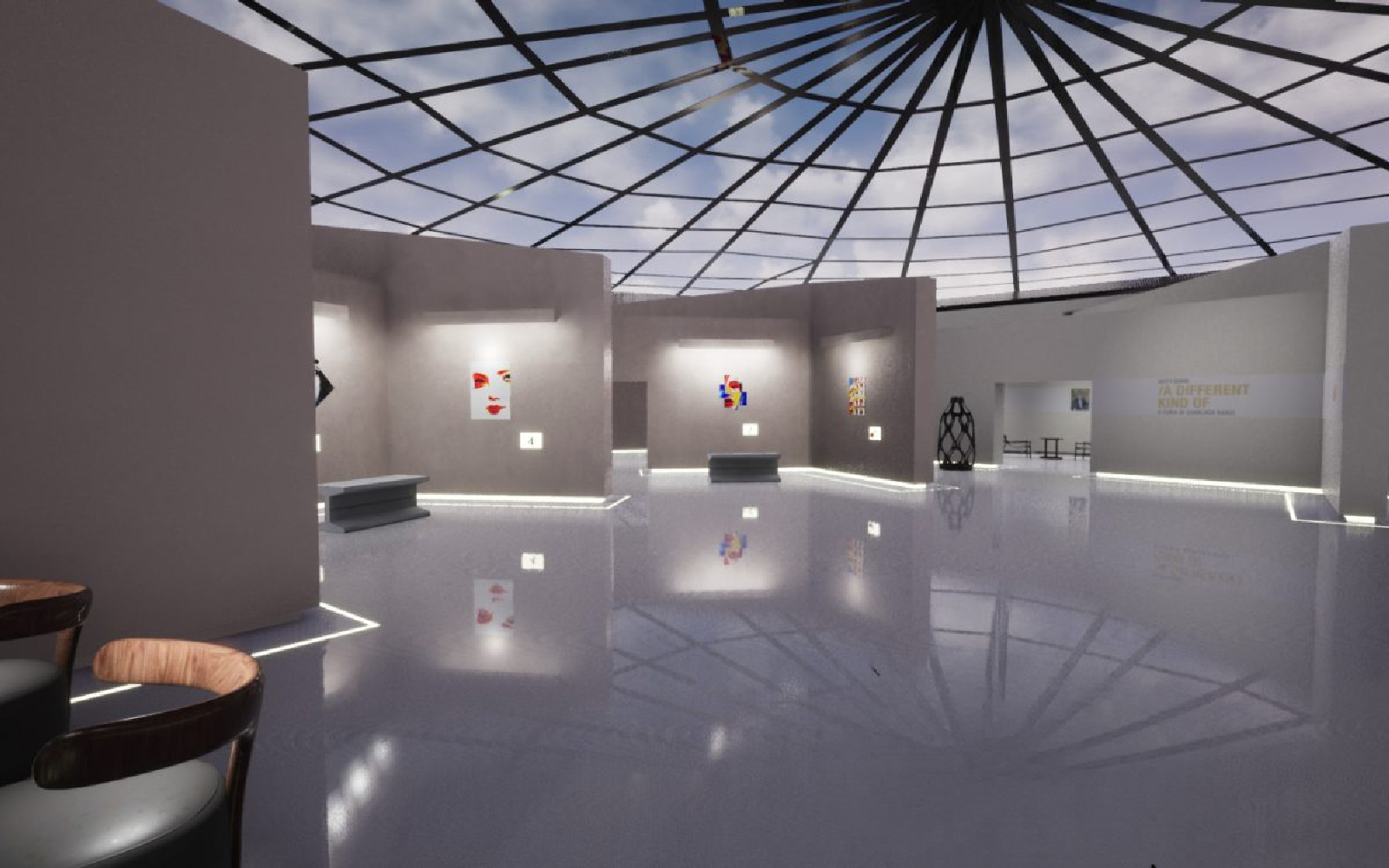
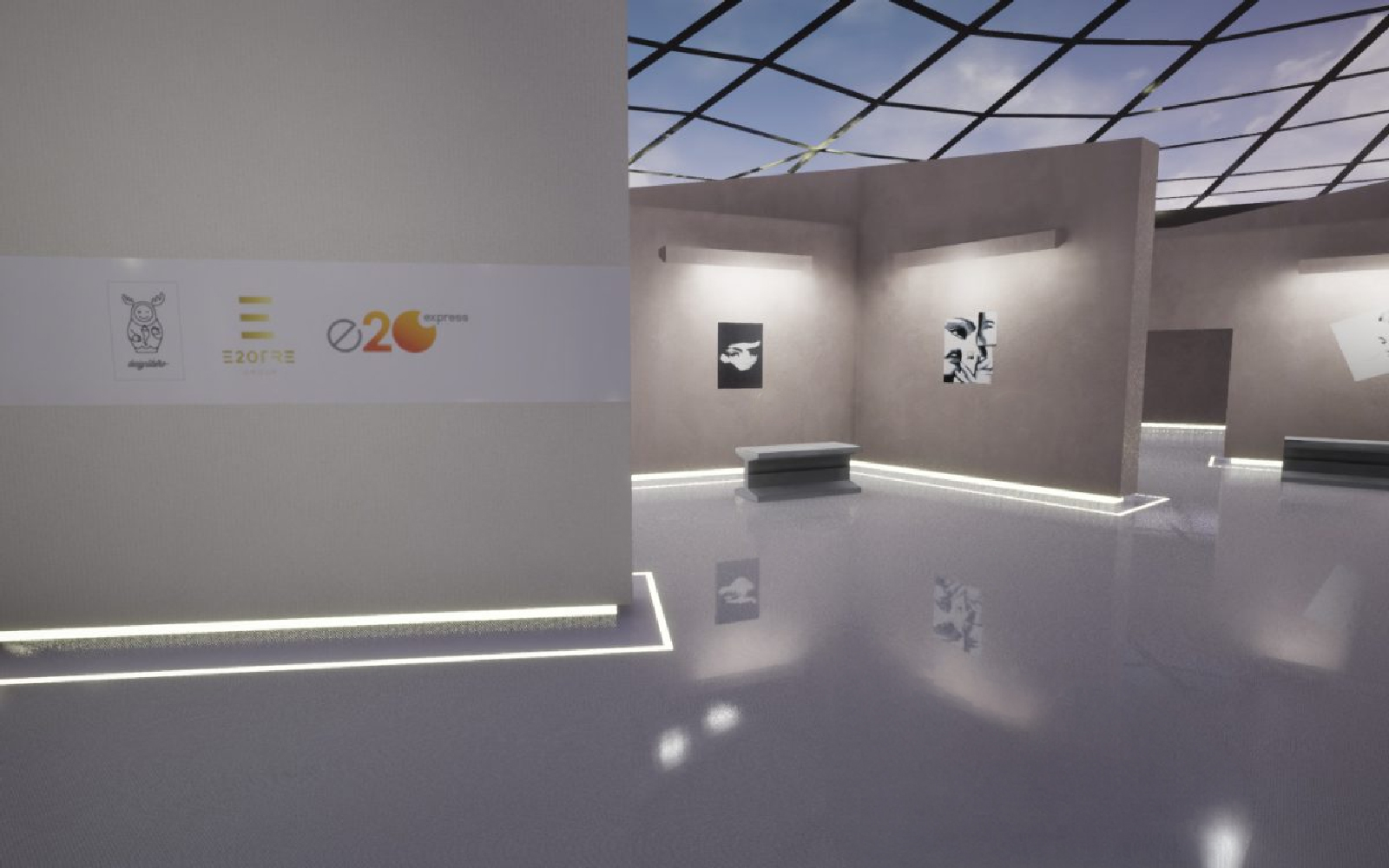
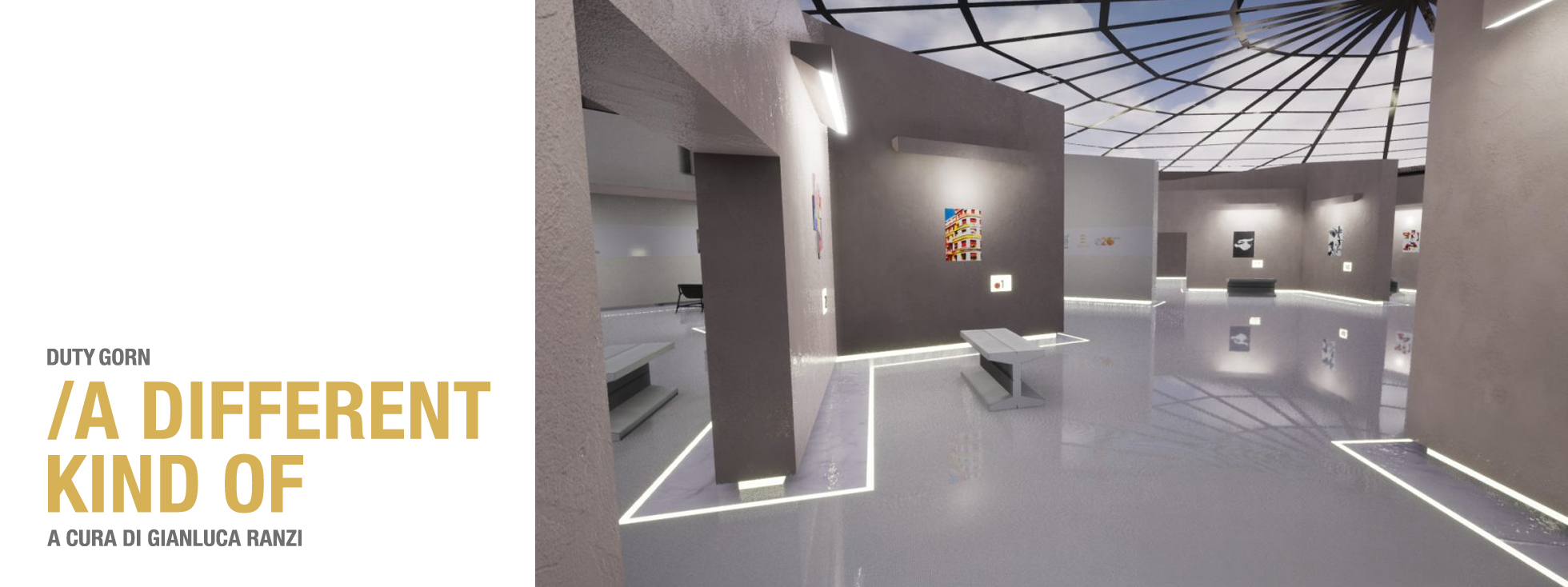
Created in collaboration with an architectural studio, the exhibition unfolds within a virtual environment conceived as a space to be explored. For three weeks, beginning on 7 July, visitors will be able to move freely through the gallery, approach the works, observe their details and construct an individual path through the different artistic languages on display. Online encounters with the artists further expand this experience, restoring the dimension of exchange and dialogue that has always accompanied the experience of art.
Virtual architecture thus ceases to function merely as a container and becomes part of the exhibition narrative itself. Walls, distances, perspectives and viewpoints construct a geography that belongs to no specific place and that, precisely for this reason, can be reached simultaneously from many different locations.
The screen becomes a threshold.
On one side remains the physical reality of domestic spaces, windows observed countless times, days spent largely within the same surroundings, and a daily life suddenly slowed down. On the other lies a place that cannot be touched but can nevertheless be traversed through the gaze, a space in which the artwork once again occupies a distance, establishes a relationship and demands attention and time.
It is precisely within this apparent contradiction that the exhibition finds one of its deepest meanings: something without a physical presence can nevertheless generate a perceptual, intellectual and emotional presence.
After all, art has always inhabited the boundary between what is present and what is absent. It operates through memory and imagination, perception and desire, through the possibility of assigning new meanings to images, objects and spaces. In moments of collective transformation, this capacity becomes particularly evident, as the artwork is not merely a testimony to what is happening, but also a means through which change itself can be observed.
The exhibition inevitably belongs to its time. It carries within it the uncertainties, distances and contradictions of the present, but also the need to imagine different forms of connection. The transition from physical to virtual space is therefore not merely a temporary response to current restrictions: it becomes an opportunity to question the very meaning of the exhibition experience and the relationship between artwork, space and viewer.
In this sense, the virtual dimension does not represent an escape from reality, but another way of moving through it.
Art does not necessarily return the world as it once was. Instead, it can reveal what change has brought to the surface: the fragility of habits, the value of presence, the necessity of human connection, and the persistent tension towards what is still unknown.
Even at a distance, a space for encounter remains open.
A space in which to continue observing, imagining and recognising the world as it changes.
DutyGorn
/A different kind of
A cura di Gianluca Ranzi
La mostra virtuale sarà accessibile da desktop o laptop
visitando multiversospazio.com da martedì 7 luglio alle 15 fino al 31 luglio.
Media Partner: e20express – Gruppo ADC