

Polyptych Cube
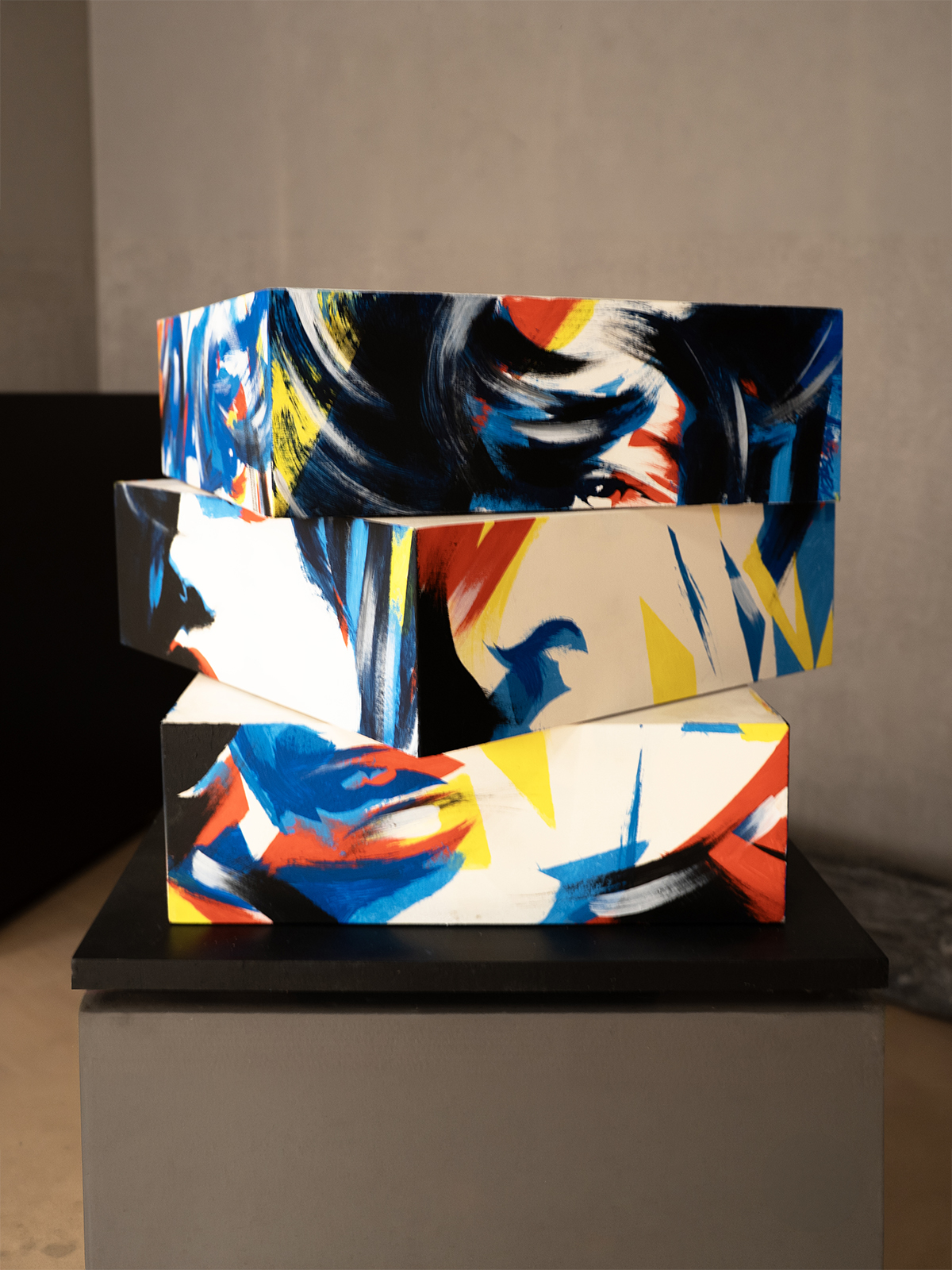
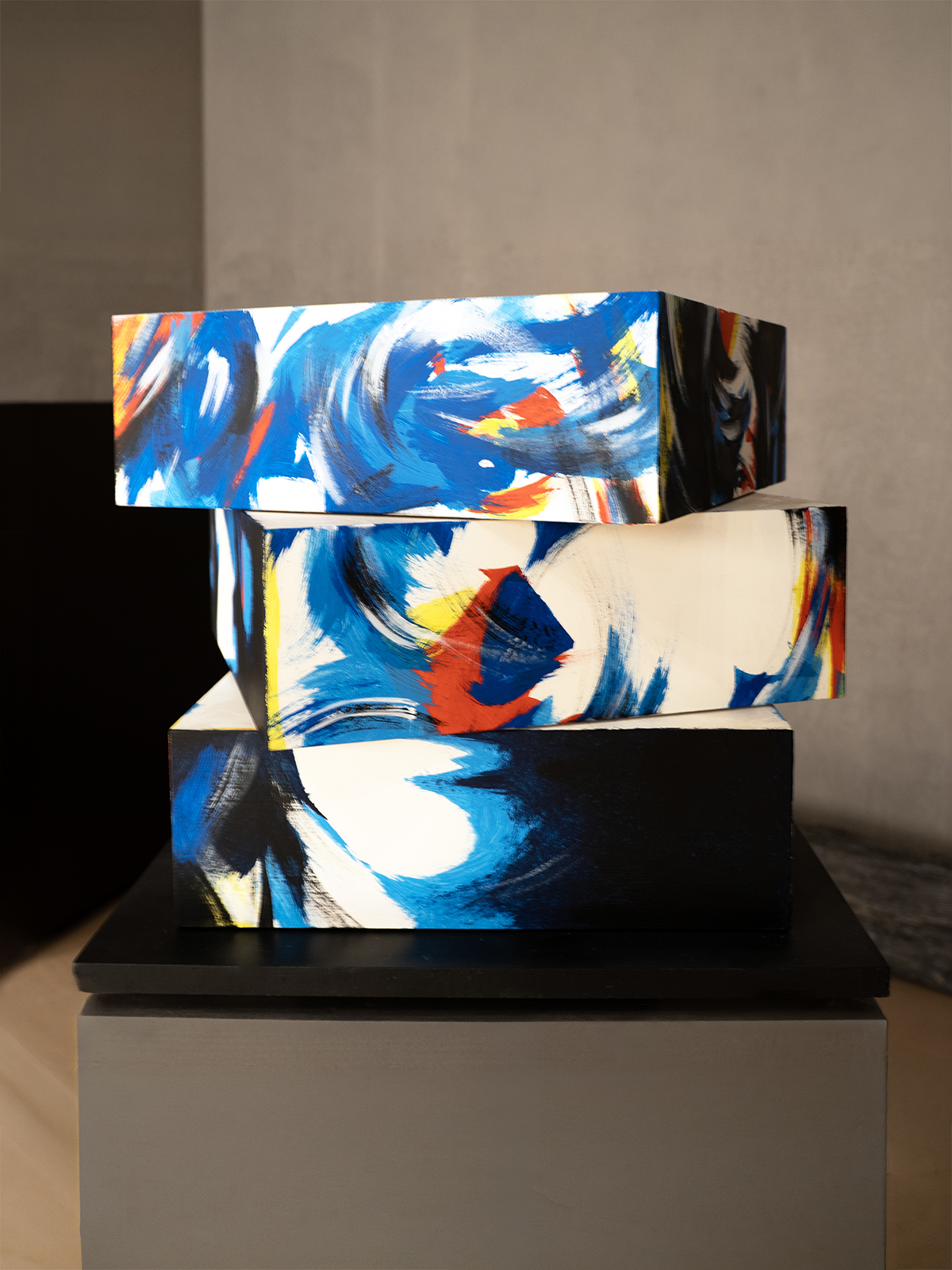
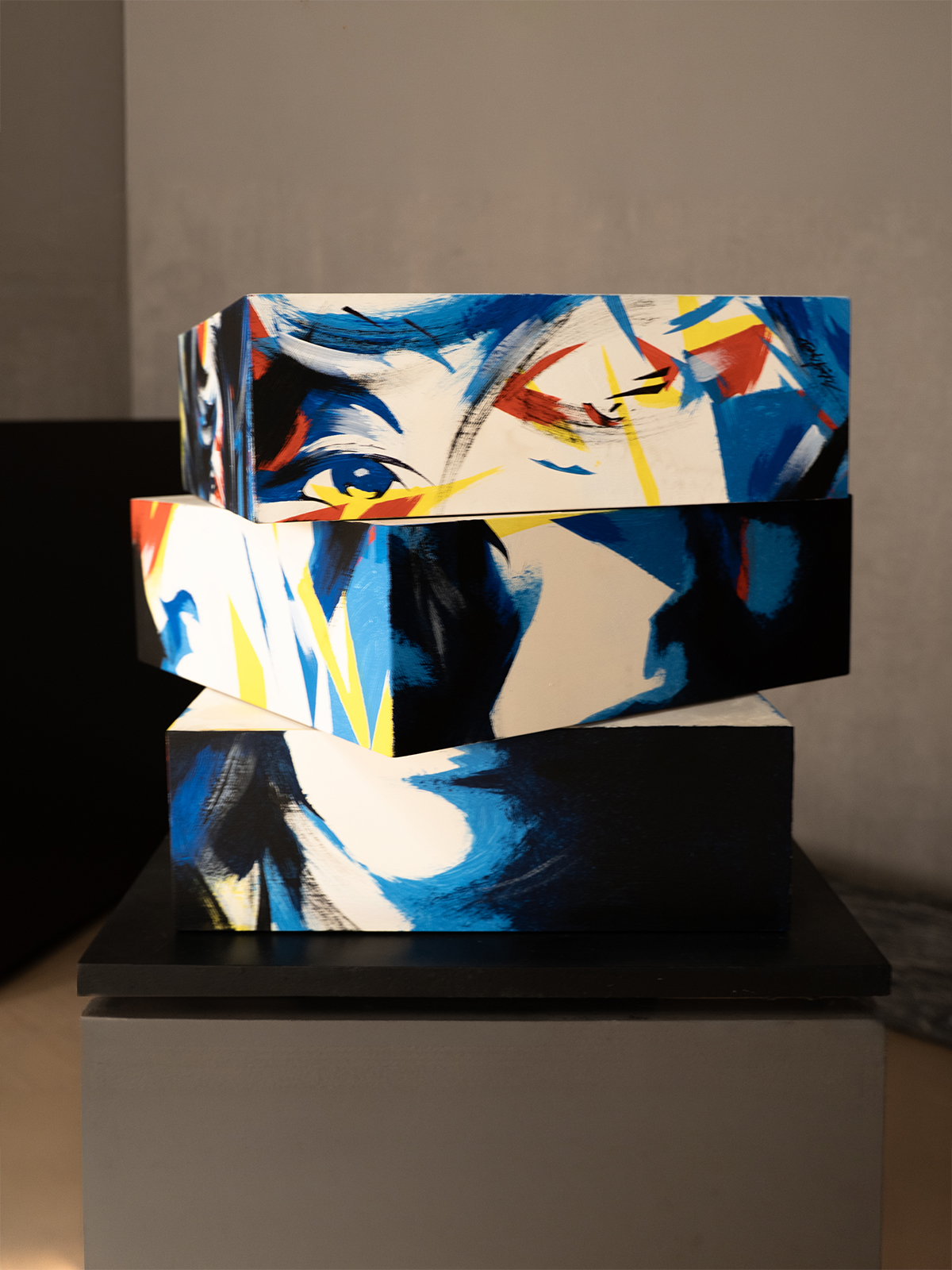
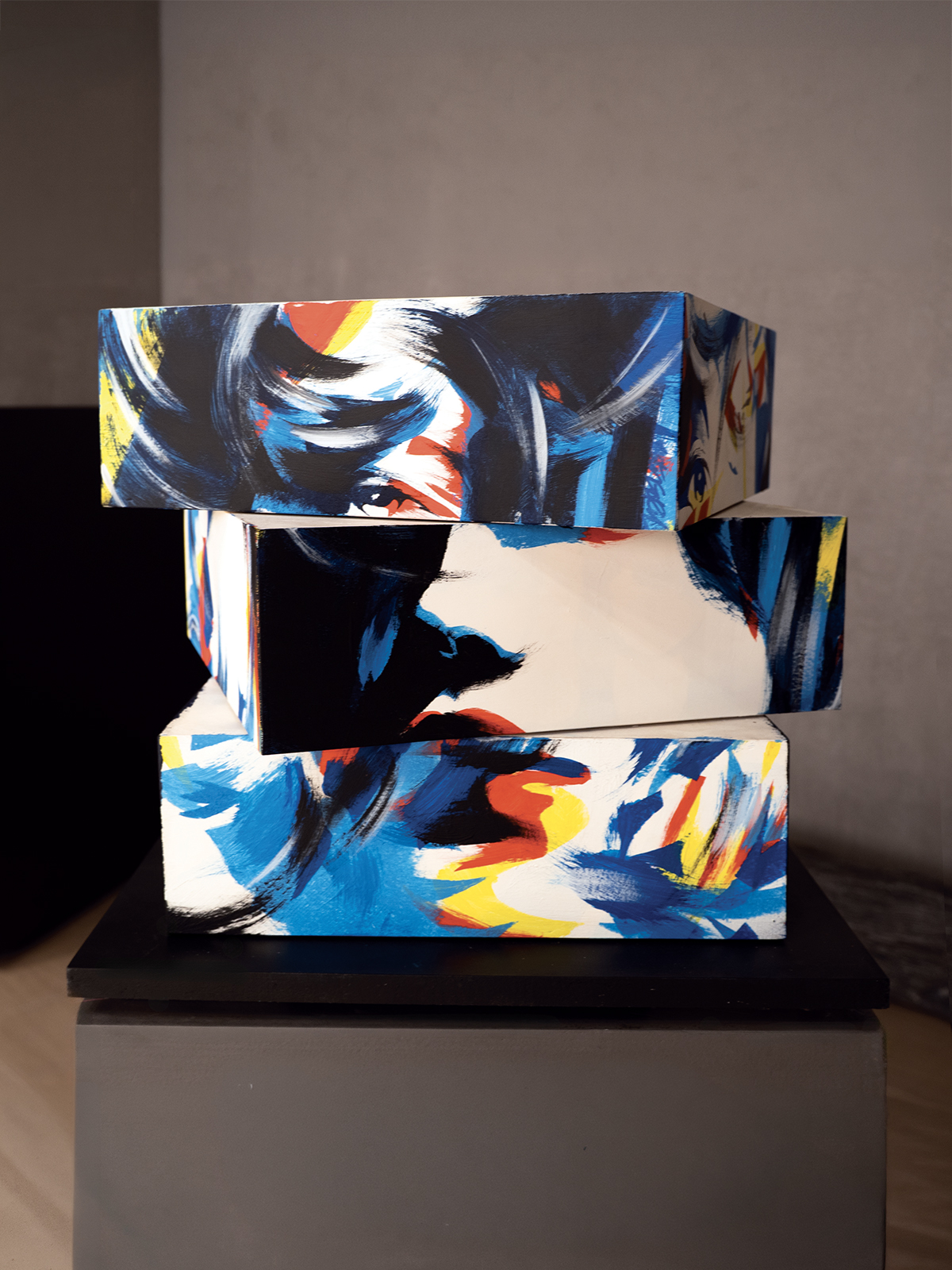
Polyptych Cube acrilico e marker, scultura in legno, 40 x 40 x 40 cm, 2026
Polyptych Cube explores the changing nature of identity, how we perceive others, and the subtle relationship between thought, memory and language. The artwork takes the form of a wooden cube, with four portraits painted on its sides: two male and two female. Its simple, almost ancient geometry contains countless possible identities and stories, none of which can be considered final.
Two horizontal cuts divide the cube into three equal, independent sections, each able to rotate around its own axis. As the sections move, the faces lose their original appearance, overlap and come together in unexpected combinations. Every rotation changes the previous arrangement, revealing new connections, contrasts and similarities. No image is permanent, and no combination is ever truly complete. The faces remain suspended between recognition and transformation, much like human identity, which can never be reduced to a single image of ourselves.
The division into three sections reflects three essential dimensions of human experience: thought, memory and language. Although distinct, they are deeply connected, shaping the way we understand ourselves and the world around us.
The upper section represents thought, the private and mysterious space where reality is constantly interpreted, remembered and imagined. Each person sees the world through personal experiences, fears, desires and emotions. Changing this section suggests the possibility of entering someone else’s mind, seeing life from an unfamiliar perspective and questioning how much of what we consider real depends on our own perception. It is a place of imagination, sudden intuition and thoughts that change direction without warning, sometimes before we can fully understand them. Even our strongest beliefs can change when confronted with another way of seeing the world.
The middle section represents the memory of places, an inner landscape where people, surroundings and experiences continue to exist long after they have disappeared from everyday life. A familiar smell can suddenly bring back a street visited years ago, the atmosphere of a childhood home or the presence of someone we no longer see. Memory does not follow a straight line. It returns through unexpected associations, connecting the present with distant moments. This section also reflects the meaning of travel, not only as a physical journey but as a continuous movement between memory and imagination. Everyone carries invisible places within themselves, landscapes and experiences that remain alive even when time has erased their physical traces. Memory becomes a silent foundation of identity, built from everything we have experienced.
The lower section represents language, the means through which our thoughts leave their private world and reach others. Speaking gives form to feelings and ideas that might otherwise remain unexpressed, but it also involves choosing what to reveal and what to keep hidden. Language has a contradictory nature: it can bring people together or create distance, express the truth or change its meaning, communicate emotions or fail to represent them. Words describe us without ever fully defining who we are. There is always a difference between what we think, what we say and what others understand. Changing this section invites us to imagine another voice, another personality and a different way of telling the same story.
Together, these three dimensions create a visual puzzle. Thoughts, memories and words exchange places, producing identities that have never existed but still appear strangely familiar. The artwork invites us to imagine two people, perhaps a man and a woman we know, and mentally combine their lives. What would happen if they could see the world through each other’s thoughts, remember places they had never visited and express themselves through another person’s voice? Where would one identity end and the other begin? This question has no simple answer, but it opens the possibility of recognising something of ourselves in another person.
The process recalls the literary technique of cut-up, in which words and sentences from different texts are rearranged to create unexpected narratives. DutyGorn brings a similar principle into painting, replacing words with facial features. The story moves beyond the written page and becomes something physical, shaped by colour, structure and movement. Every rotation becomes a rewritten sentence, every new combination an unexpected chapter, and every face the beginning of another imagined life. The characters change, but the story continues without a predetermined ending.
Within DutyGorn’s artistic practice, Polyptych Cube brings the polyptych back to an early, almost primitive form, exploring the origins of deconstruction. The deliberate cuts do not destroy the image but question its apparent unity. What is separated does not necessarily lose its meaning; instead, it can acquire a new one through its connection with something unfamiliar. Deconstruction becomes the starting point for continuous reconstruction, where every new arrangement carries something of the previous ones. Painting moves beyond its traditional stillness, while the portrait becomes a changing structure capable of containing multiple identities.
The expressive power of the four faces contrasts with the instability of their arrangement. Colour does more than describe their appearance; it creates visual connections between different features and accompanies their transformation. Painting, geometry and movement become part of the same language, creating a constant tension between order and unpredictability. The artwork exists within this contrast: its physical structure remains almost unchanged, while the images it contains are always open to transformation.
Yet a deeper question runs through the entire work: how much of who we are truly belongs to us? Identity develops through the people we meet, the places we visit, the words we hear and the experiences we unconsciously absorb. Every relationship leaves a trace, and every experience gradually changes how we see ourselves and others. We are shaped by layers of memories, emotions, encounters and possibilities, both real and imagined.
Polyptych Cube therefore goes beyond the representation of four faces. It explores the possibility of recognising ourselves in someone else’s existence. The viewer is no longer simply an observer but becomes an active participant, invited to choose, imagine and transform. Rotating a section becomes an act of empathy, an attempt to cross the invisible boundary between one person’s consciousness and another’s. Each movement changes the image while raising new questions about what makes us unique, recognisable and connected to others.
Perhaps the deepest meaning of the artwork lies in this impossible meeting of identities. Identity is not something fixed or isolated from the world, but something constantly shaped by encounters and transformation. We are never only what we believe ourselves to be, but also everything we have embraced, lost, remembered and forgotten.
LINKS


